Published Mar 24, 2023 · Updated Sep 14, 2026

Perspective Unity featured by Clutch
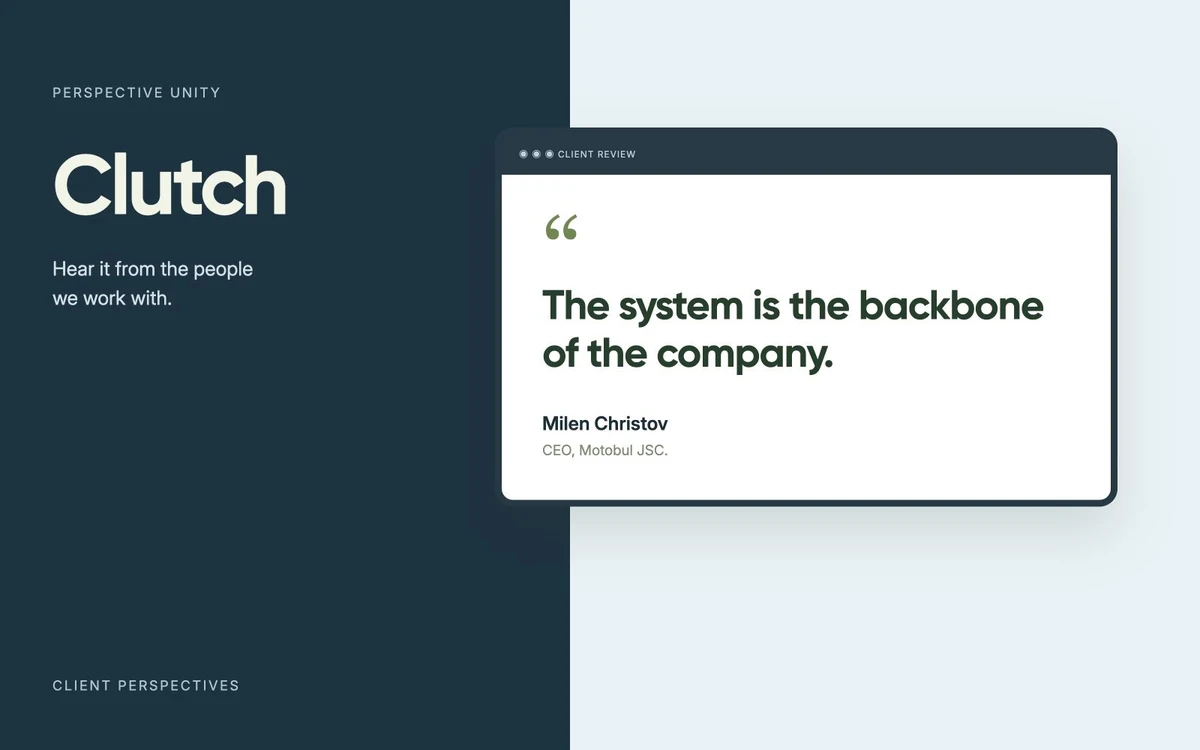
Perspective Unity featured by Clutch

A company update from the archive

This article records an earlier Clutch feature about Perspective Unity. It belongs in our company news archive, with the original publication date preserved.

What the recognition can tell you

Client feedback can add context to a company’s work. To assess a delivery partner, read the individual review, the engagement it describes and the date, alongside relevant project examples.

Look at the work as well

Our case studies describe systems built for specific businesses, including the problem, the approach and the delivered capabilities. They are a useful next step when considering whether our experience fits your project.

Use recognition as a starting point for due diligence

An award or review can introduce a company, but a buyer still needs to understand the team, the work and the fit for a particular project. Read the context of a review and compare it with the kind of engagement you are considering.

Ask what problem the team addressed, which responsibilities it owned and what the customer contributed. Look for a clear explanation of the implementation and its limitations. A recognizable client name on its own does not establish the scope of the relationship.

Ask about the work behind the description

For a relevant case study, discuss the starting situation, the constraints and the difficult decisions. Find out how requirements were clarified, how integrations and data were handled, and how the team tested the result before release.

At Perspective Unity, our published work includes business systems for customer operations, workforce processes, card management and document access. Use those examples to start a conversation about the similarities and differences with your own situation.

Judge the proposed working relationship

A useful proposal should make the initial scope, responsibilities, dependencies and review points clear. Ask how the team will handle unknowns and how it distinguishes a defect from a change in requirements.

You should be able to understand the recommendation and the assumptions behind it. Recognition can support an initial conversation; the evidence from relevant work and the clarity of the proposed engagement help you make the actual choice.

Explore the next step with Perspective Unity.

More from the Blog