How to measure AI productivity in an ERP workflow
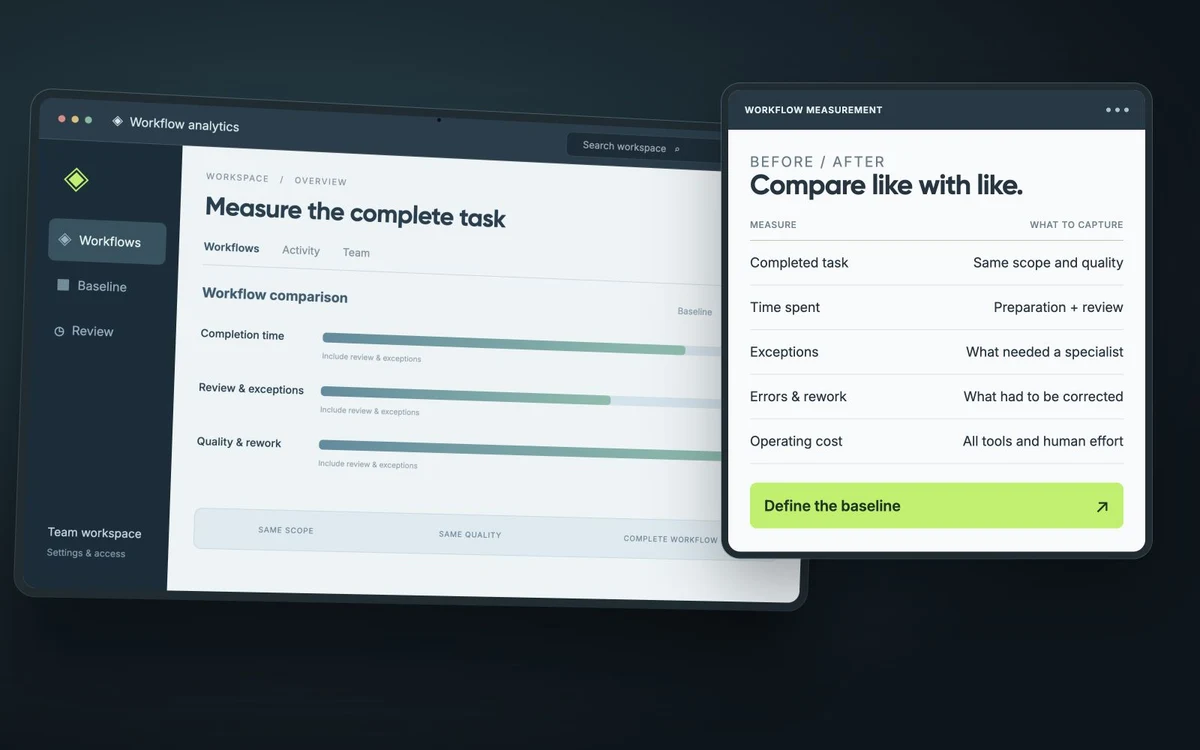
Measure the human effort needed to finish the same work, at the same quality. That is a more useful test of operational AI than the speed at which it produces a draft.
Start with a finished outcome
Choose one unit of work: a supplier document accepted against an order, a payment reconciled, a correct offer sent or a delivery exception resolved.
Use the same start and finish in both processes. An accepted record and an AI draft are different outcomes. Include the normal task mix, from clean digital records to the awkward cases your team actually handles.
Count the work people still do
Include reading, data entry, matching, checking, exception handling and corrections. Count the effort of other teams when it contributes to the same outcome.
Less human handling and faster turnaround are two different benefits. Measure each separately.
A task can need little staff time while waiting hours for a supplier. Removing that wait and reducing hands-on work require different changes.
Compare like with like
Twenty minutes of human handling reduced to two gives a 10× handling-time ratio. The calculation is straightforward; the evidence behind the two numbers matters more.
Same completed task.
Two measurements.
Include checking, exceptions and corrections in both measurements.
handling-time ratio20 ÷ 2 minutes per completed task
Report the task count, observation period and quality criteria with the ratio. Include exceptions in the average, and show the range when difficult cases materially change the result.
What we built for China Motor
We built China Motor’s custom ERP and CRM platform to connect importer operations, dealer sales and aftersales. AI agents read operational documents and connect the information to business records. Bank-transfer information supports reconciliation, while dealer teams can prepare offers, contracts and invoices from their phones.
For a document workflow like this, extraction speed is only one step. The useful measure is the effort needed to check the document, match it to the right record and complete the next action, including the exceptions that still need a person.
See how we connected documents, finance, logistics and dealer sales at China Motor →
Put quality and running costs alongside time
A workflow that needs constant correction has not released the capacity its headline suggests. Keep these checks together:
| Measure | What to include |
|---|---|
| Human effort | Review, exceptions and corrections across the complete task. |
| Accepted quality | Accuracy, missing information and work returned for correction. |
| Operating cost | Model usage, software, infrastructure, support and integration maintenance. |
| Reliability | What happens when a supplier document or external interface changes. |
Decide what the released capacity is for
More customer conversations, faster exception resolution, better planning or greater transaction volume: name the outcome the team wants. Specialists still own unusual cases and consequential decisions.
Set the baseline before the pilot
Agree the scope, quality checks and observation period first. Compare again once the workflow is in regular use, separating measured results from expected improvements.