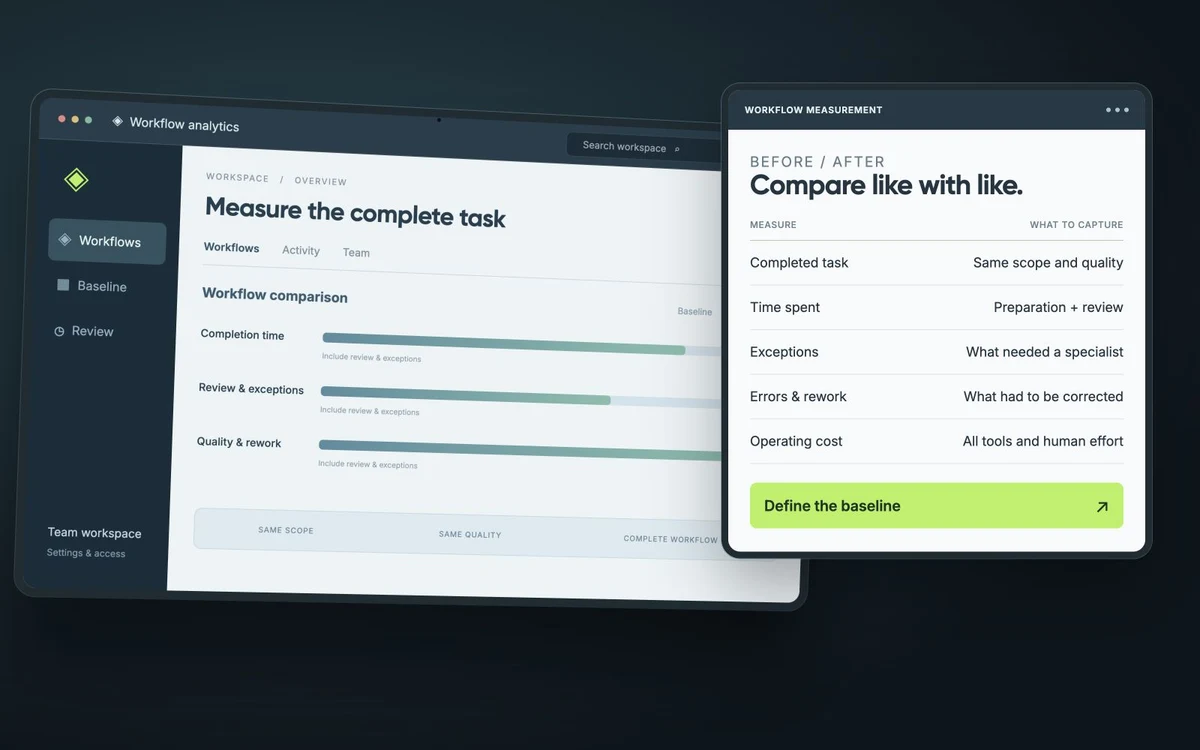
What a useful software assessment should produce
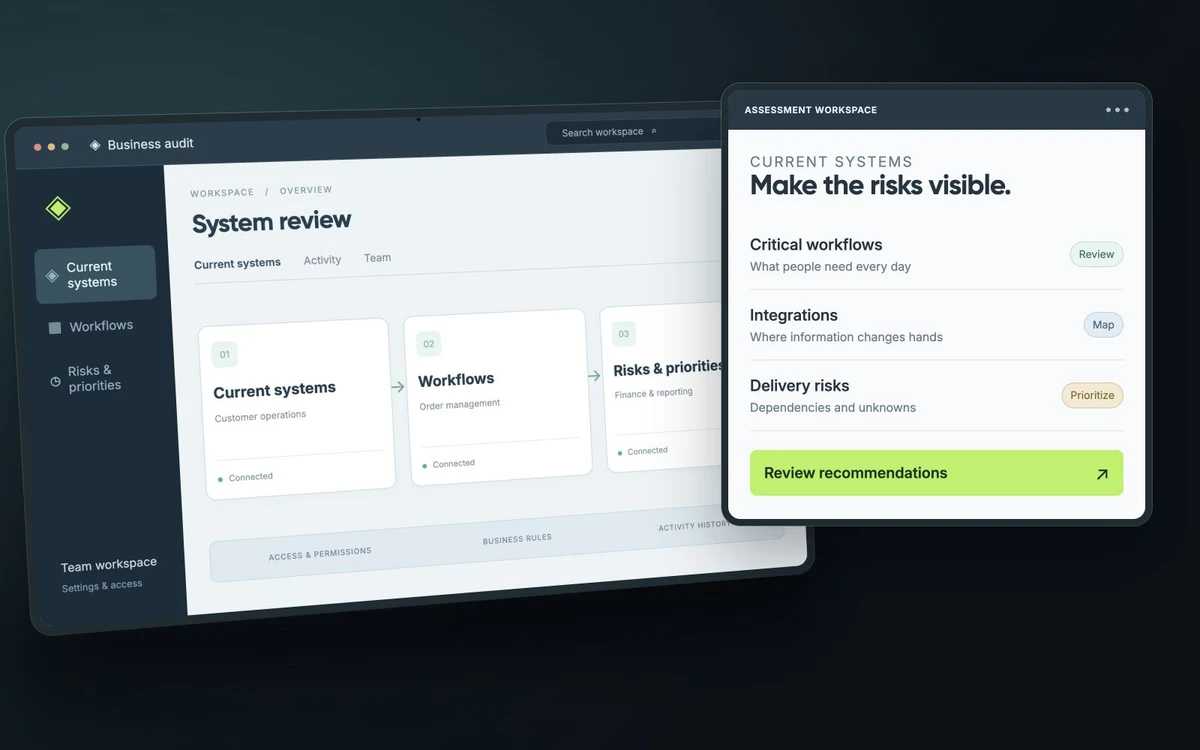
A software assessment should leave you able to make a decision. A long report that lists problems without explaining what to do next has not finished the job.
Start with evidence already in the business
Application access, spreadsheets, support issues, forms and reports give the review a starting point. Pick a real scenario and follow it through those sources before asking people to explain the entire operation in a workshop.
Keep the finding separate from the diagnosis. “The same customer appears twice in this export” is an observation. “The integration creates duplicates” is a hypothesis until the team has checked how those records were created.
Show what a recommendation would preserve
Assessment should not assume replacement. ECONT’s document platform used existing sign-on and ERP permissions. The new capability had to fit into that arrangement, not introduce a separate identity model.
For each proposed change, ask which problem it addresses, what stays in place and which dependency could prevent delivery. An integration, a process change or a targeted repair may be a better first scope than a new application.
Ask for a decision you can review
The output should name the options, the recommended approach, the evidence behind it and the assumptions still open. If the estimate depends on a third-party API or the condition of the data, the report should propose a specific check.
Agree the required depth before the assessment begins. Sometimes you need an options review; sometimes you need prototypes, architecture and detailed requirements. Discuss the decision with us, then define the work needed to support it.